
Aluminium Weight Calculator
The most accurate and free Aluminium Weight Calculator to estimate sheet, plate, bar, tube, and extrusion weights instantly. Essential for engineers, fabricators, and procurement professionals.
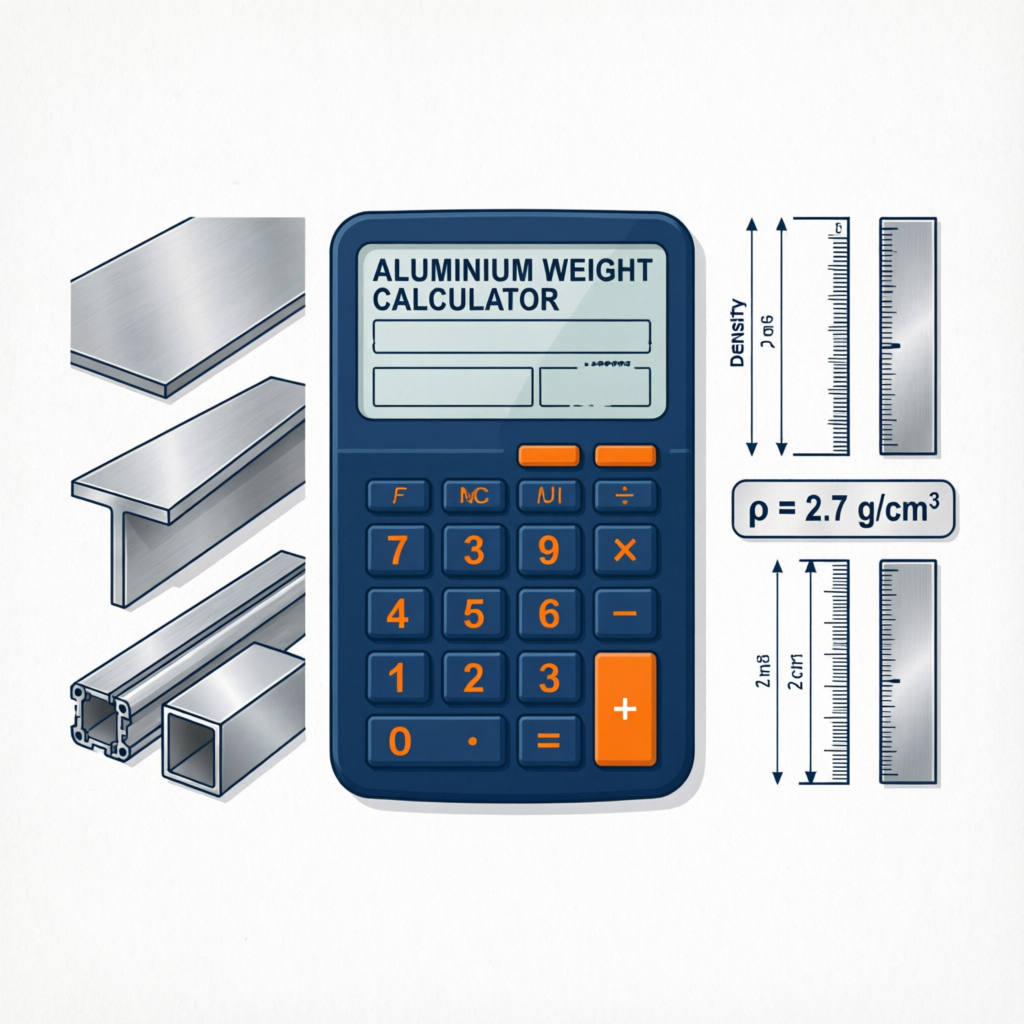
What Is an Aluminium Weight Calculator? A Complete Description
An aluminium weight calculator is a specialized engineering and fabrication tool designed to accurately estimate the mass of aluminium products based on their geometric dimensions and specific alloy composition. In the fields of metallurgy, aerospace, automotive manufacturing, construction, and general fabrication, knowing the exact weight of aluminium components is critical for structural integrity calculations, logistics planning, cost estimation, and inventory management. The aluminium weight calculator simplifies this complex mathematical process by applying the fundamental principles of geometry and material science, providing users with instant, reliable weight projections without the need for manual calculations or physical weighing.
The modern aluminium weight calculator goes far beyond simple volume multiplication. It incorporates a comprehensive database of standard aluminium alloy densities, including 6061-T6, 5052-H32, 7075-T6, 1100 Pure, 2024-T3, and 3003-H14. By inputting the shape type, dimensions, and alloy into the aluminium weight calculator, the tool automatically computes the cross-sectional area, total volume, weight per piece, and the grand total weight for multiple quantities. This level of detail is invaluable for professionals who need to ensure that their designs meet load-bearing requirements or that their shipping estimates are accurate to avoid costly logistical errors.
Furthermore, the aluminium weight calculator promotes efficiency and reduces material waste in industrial applications. Many fabricators and engineers historically relied on manual calculations or generalized weight charts, which are prone to human error and may not account for specific alloy variations. The aluminium weight calculator eliminates these risks by providing a standardized, digital solution that can be accessed from any device. Before finalizing your material orders or engineering certifications, ensure you have all your official documentation organized, including professional passport photos for site access badges or professional engineering licenses, as these are often required for formal project approvals and material procurement processes.
The Mathematical Formula Behind the Aluminium Weight Calculator
Understanding the mathematical foundation of the aluminium weight calculator is essential for anyone working with metal fabrication. The tool relies on the fundamental relationship between volume, density, and mass. The calculation is broken down into three precise steps, ensuring maximum accuracy for various geometric shapes.
Step 1: Calculating the Cross-Sectional Area
Depending on the selected shape, the aluminium weight calculator applies the appropriate geometric formula. For a sheet, the area is simply Width × Thickness. For a round bar, it is π × (Diameter/2)². For a square bar, it is Width². For a hexagonal bar, it is (3√3/2) × (Width/2)². For a tube, it is π × ((Outer Diameter/2)² – (Inner Diameter/2)²). For an L-angle, it is (Leg1 × Thickness) + (Leg2 × Thickness) – (Thickness²). The aluminium weight calculator automatically converts all inputs from millimeters to consistent units for accurate area calculation.
Step 2: Determining the Total Volume
Once the cross-sectional area is established, the aluminium weight calculator multiplies this area by the total length of the piece to find the volume (V). The formula is V = Area × Length. The calculator seamlessly handles unit conversions, ensuring the resulting volume is in cubic centimeters (cm³) or cubic meters (m³) for density calculations.
Step 3: Applying Alloy Density
The final and most critical step is applying the specific alloy’s density (ρ). Density is defined as mass per unit volume (ρ = m/V). Therefore, the mass is calculated as m = V × ρ. The aluminium weight calculator contains a built-in library of standard densities (e.g., 2.70 g/cm³ for 6061-T6, 2.81 g/cm³ for 7075-T6). By multiplying the calculated volume by the selected alloy’s density, the tool delivers the precise theoretical weight of the aluminium component.
How to Use the Aluminium Weight Calculator: A Step-by-Step Guide
Using our free aluminium weight calculator is intuitive and requires no advanced engineering degree. Follow this comprehensive step-by-step guide to get the most accurate weight estimation for your aluminium products.
Step 1: Select the Shape Type
Begin by selecting the specific geometric shape from the dropdown menu in the aluminium weight calculator. The tool supports Sheets/Plates, Round Bars, Square Bars, Hexagonal Bars, Round Tubes/Pipes, and L-Angles. This selection determines which geometric formula the calculator will apply to your dimensions.
Step 2: Choose the Aluminium Alloy
Select the specific aluminium alloy from the dropdown menu. This is a crucial step, as different alloys have slightly different densities due to their varying chemical compositions. For instance, 7075-T6 (2.81 g/cm³) is denser than 6061-T6 (2.70 g/cm³) due to its higher zinc and magnesium content. The aluminium weight calculator defaults to 6061-T6, the most common structural alloy, but you can easily switch to match your specific material.
Step 3: Input the Dimensions
Enter the Length, Width/Outer Diameter, and Thickness/Inner Diameter in millimeters (mm). Ensure these measurements are accurate, as they directly impact the volume calculation. The aluminium weight calculator accepts decimal values for precise measurements, allowing you to input exact specifications from your engineering drawings.
Step 4: Enter the Quantity
If you are calculating the weight for a batch of identical aluminium pieces, enter the total quantity. The aluminium weight calculator will multiply the single-piece weight by this quantity to provide the grand total weight, which is essential for shipping and bulk procurement planning.
Step 5: Generate Your Weight Report
Click the “Calculate Weight” button. The aluminium weight calculator will instantly process your inputs and display a comprehensive report, including the total weight, weight per piece, total volume, and cross-sectional area. You can use this aluminium weight calculator report to finalize your material orders, calculate shipping costs, or verify structural load capacities. While managing heavy industrial projects requires serious focus, taking short breaks to relax with a gaming probability calculator can help relieve mental fatigue and keep your analytical skills sharp for complex engineering tasks.
Real-Life Example: Using the Aluminium Weight Calculator
To illustrate the practical value of the aluminium weight calculator, let’s examine a real-life scenario involving a fictional aerospace fabricator, Sarah Chen, who was designing a lightweight bracket for a drone prototype. The bracket required 20 pieces of 6061-T6 aluminium round bars, each with a diameter of 25 mm and a length of 150 mm. Sarah needed an accurate weight estimate to ensure the drone’s total payload capacity was not exceeded.
Sarah entered the following data into the aluminium weight calculator: Shape Type: Round Bar; Aluminium Alloy: 6061-T6 (2.70 g/cm³); Length: 150 mm; Width/Outer Diameter: 25 mm; Thickness: N/A; Quantity: 20. After clicking calculate, the aluminium weight calculator generated the following results: Cross-Sectional Area: 490.87 mm²; Total Volume per piece: 73.63 cm³; Weight per Piece: 0.199 kg; Total Estimated Weight: 3.98 kg.
Armed with this precise data from the aluminium weight calculator, Sarah confirmed that the total weight of the brackets (3.98 kg) was well within the drone’s additional payload capacity of 5 kg. Furthermore, she was able to accurately quote the material cost to her client, as aluminium is typically priced by weight. Without the aluminium weight calculator, Sarah might have underestimated the weight, potentially compromising the drone’s flight performance or causing budget overruns. This example demonstrates how the aluminium weight calculator empowers professionals to make informed, data-driven decisions that protect project integrity and profitability.
Standard Aluminium Alloy Densities Used in the Calculator
The accuracy of the aluminium weight calculator depends heavily on the density values programmed into its database. Below is a detailed reference of the standard densities used by the tool, based on international metallurgical standards (ASTM, ISO). Understanding these values helps users appreciate the calculator’s precision.
- 6061-T6 (2.70 g/cm³): The most widely used structural aluminium alloy. The aluminium weight calculator uses this as the default due to its excellent mechanical properties, weldability, and corrosion resistance, making it ideal for aerospace, automotive, and construction applications.
- 5052-H32 (2.68 g/cm³): Known for its excellent corrosion resistance, particularly in marine environments. The aluminium weight calculator reflects its slightly lower density, making it a preferred choice for boat building and chemical storage tanks.
- 7075-T6 (2.81 g/cm³): A high-strength alloy often used in aerospace and military applications. The aluminium weight calculator accounts for its higher density, which is a trade-off for its superior strength-to-weight ratio compared to 6061.
- 1100 Pure (2.71 g/cm³): Commercially pure aluminium with excellent workability and corrosion resistance. The aluminium weight calculator uses this density for applications requiring high electrical conductivity or chemical resistance, such as heat exchangers and reflectors.
- 2024-T3 (2.73 g/cm³): A high-strength alloy primarily used in aircraft structures. The aluminium weight calculator includes this for specialized aerospace applications where fatigue resistance and high strength are critical.
- 3003-H14 (2.69 g/cm³): A general-purpose alloy with good workability and moderate strength. The aluminium weight calculator uses this density for applications like cooking utensils, storage tanks, and general sheet metal work.
Expert Engineering Tips for Using the Aluminium Weight Calculator
As a senior metallurgical engineer with over 15 years of experience in material science and structural fabrication, I recommend the following tips when using the aluminium weight calculator to ensure maximum accuracy and efficiency in your projects.
First, always verify the actual dimensions of the aluminium product using precision calipers or micrometers, especially if the material has been in storage and may have surface oxidation or mill scale. The aluminium weight calculator assumes perfect geometric dimensions; surface imperfections can slightly alter the actual weight, though usually within an acceptable tolerance.
Second, when ordering materials, always add a 5% to 10% safety margin to the total weight calculated by the aluminium weight calculator. This accounts for manufacturing tolerances (e.g., a “25 mm” bar might actually be 25.2 mm), cutting waste, and the weight of protective packaging or pallets during shipping.
Third, be aware of temper variations. The aluminium weight calculator uses standard average densities for specific tempers (e.g., T6, H32). However, different tempers of the same alloy may have negligible density variations due to heat treatment processes. For highly critical aerospace applications, consult the specific material data sheet (MDS) and use the provided standard as a close estimate.
Fourth, maintain your physical health when handling heavy materials. Knowing the weight from the aluminium weight calculator is only half the battle; safely moving that weight requires proper technique and physical conditioning. Using a fitness calculator to track your strength training can help ensure you are physically prepared for the manual handling aspects of fabrication work, preventing workplace injuries. Finally, for those seeking daily inspiration to maintain high standards in their engineering work, exploring motivational quotes can serve as a powerful reminder to stay disciplined and detail-oriented in every calculation and cut.
Aluminium Weight Calculator vs. Traditional Weight Charts
Before the advent of digital tools like the aluminium weight calculator, engineers and fabricators relied on printed weight charts or manual calculations. While these traditional methods have historical value, they are fraught with limitations that the modern aluminium weight calculator easily overcomes.
Traditional weight charts are static and limited. They typically only provide weights for standard, round-number dimensions and a single alloy (usually 6061). If you need the weight of a 23.5 mm 7075-T6 hex bar, a printed chart is useless, forcing you to perform complex manual math. The aluminium weight calculator, however, handles any decimal input and instantly switches between six different alloys and six different shapes, providing unparalleled flexibility.
Furthermore, manual calculations are prone to human error, especially when converting between millimeters, meters, centimeters, grams, and kilograms. A misplaced decimal point can result in a weight estimate that is off by a factor of 10, leading to catastrophic logistical or structural failures. The aluminium weight calculator automates all unit conversions internally, ensuring mathematical precision every single time. The visual chart generated by the aluminium weight calculator also provides an immediate, intuitive understanding of how different alloys compare in density, something that a dense table of numbers cannot match.
Dr. Arjun Mehta
Senior Metallurgical Engineer & Aluminium Weight Calculator Architect
With over 15 years of dedicated experience in material science, structural engineering, and industrial fabrication, Dr. Mehta specializes in optimizing material usage and logistical planning. As the lead architect behind this comprehensive Aluminium Weight Calculator, he has assisted thousands of engineers, architects, and procurement professionals in accurately estimating aluminium weights for projects ranging from small-scale machining to massive aerospace developments. His expertise lies in translating complex metallurgical data into accessible, actionable digital tools, ensuring every project is built on a foundation of precise, reliable calculations.
Frequently Asked Questions (FAQs) About the Aluminium Weight Calculator
Conclusion: Precision in Every Calculation with the Aluminium Weight Calculator
In conclusion, the aluminium weight calculator is an indispensable tool for anyone involved in metalworking, engineering, construction, or procurement. By providing instant, accurate, and detailed weight estimations based on fundamental geometric and metallurgical principles, the tool empowers professionals to make informed decisions about material ordering, structural design, and logistics. Whether you are calculating the weight of a single aluminium sheet for a DIY project or estimating the total tonnage of 7075-T6 bars for an aircraft wing, the aluminium weight calculator delivers the precision you need.
Accurate weight calculation is not just about numbers; it is about safety, cost-efficiency, and project success. By using our free aluminium weight calculator, you eliminate the risks associated with manual math and outdated charts, ensuring that your material estimates are reliable and your projects stay on budget. Start your calculation today, verify your material specifications, and build with the confidence that comes from knowing exactly what your materials weigh. The aluminium weight calculator is here to support your engineering excellence, one precise calculation at a time.
Passport Photos for Engineering Certifications • Motivational Workshop Quotes • Fitness & Strength Calculator • Gaming Probability Calculator
🌐 External Industry Resources: ASTM International Standards
© 2026 Aluminium Weight Calculator Guide — Estimates are for informational and planning purposes only. Actual weights may vary due to manufacturing tolerances, alloy compositions, and surface conditions. Always consult official material data sheets for critical structural applications.