
Dahej Calculator
The most comprehensive and free Dahej Calculator to estimate wedding, dowry, and related expenses accurately. Plan your budget, ensure financial transparency, and make informed decisions for your special day.
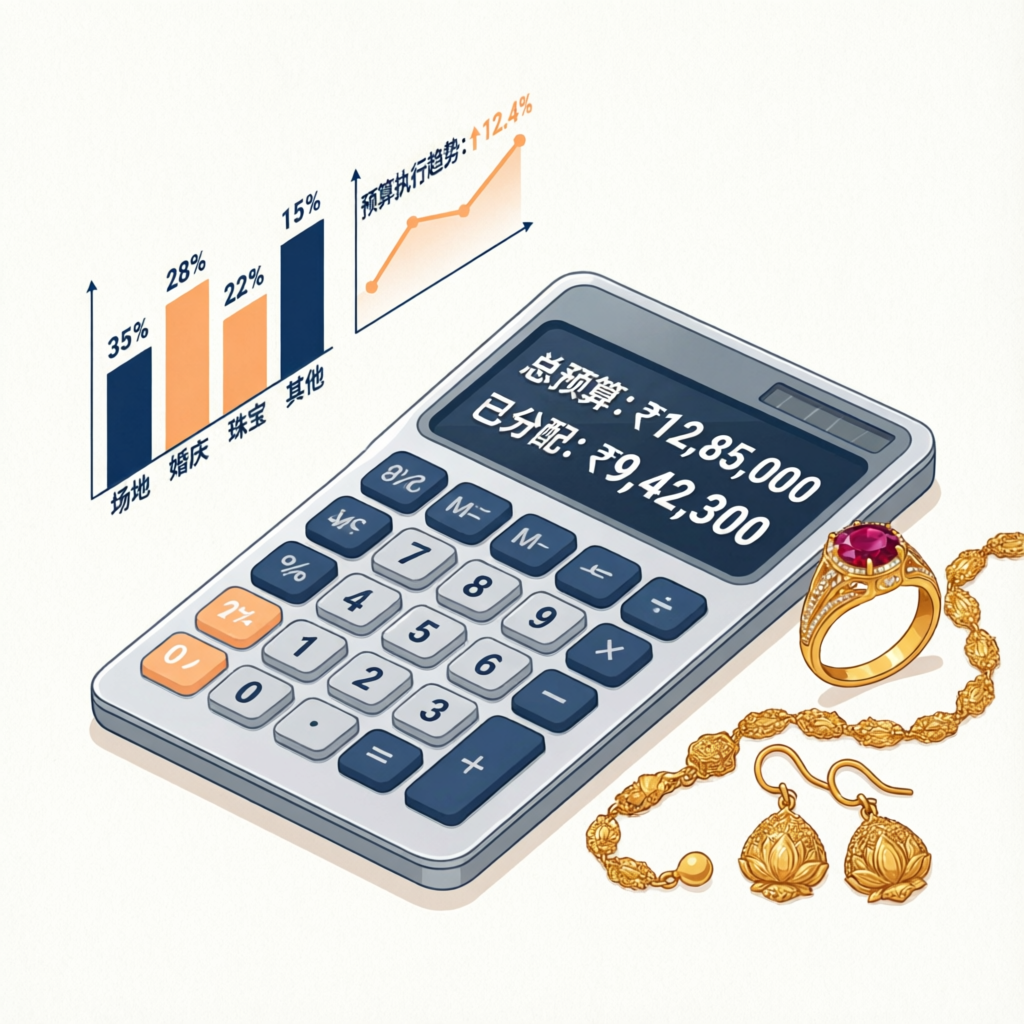
What Is a Dahej Calculator? A Complete Description
A dahej calculator is a specialized digital financial planning tool designed to help families, couples, and wedding planners accurately estimate the total costs associated with wedding ceremonies, dowry-related expenses, and pre-wedding financial commitments. In the context of South Asian wedding traditions, particularly in India, Pakistan, and Bangladesh, the term “dahej” (dowry) has historically referred to the transfer of parental property, gifts, or money at the marriage of a daughter. However, in modern financial planning, a dahej calculator serves a much broader and more responsible purpose: it helps families budget for all legitimate wedding expenses, including jewelry, furniture, appliances, venue costs, catering, and other ceremonial expenditures, while promoting financial transparency and preventing debt traps.
The modern dahej calculator tool goes far beyond simple arithmetic. It incorporates variables such as the number of guests, regional cost variations, inflation rates, and contingency funds to provide a comprehensive financial snapshot. By using a dahej calculator, families can avoid the common pitfall of underestimating wedding costs, which often leads to taking on high-interest loans or depleting lifelong savings. Our free online dahej calculator is built with user experience in mind, featuring an intuitive interface that requires no financial expertise to operate. Whether you are planning a simple court marriage or a grand destination wedding, the dahej calculator adapts to your specific needs and provides real-time, accurate estimates.
Furthermore, the dahej calculator promotes ethical financial planning. By clearly itemizing every expense category—from gold jewelry and household appliances to venue rentals and catering—the tool encourages families to have open, honest conversations about money before the wedding. This transparency is crucial in preventing the social and legal issues associated with illegal dowry demands. The dahej calculator is not just a number-crunching tool; it is a catalyst for responsible financial behavior and modern, equitable wedding planning. Before finalizing your wedding plans, don’t forget to prepare your official documents, including professional passport photos for your marriage registration, as these are essential legal requirements that should also be factored into your overall wedding budget.
Why You Need a Dahej Calculator for Wedding Planning
Wedding planning is one of the most financially significant events in a family’s life, and the need for a reliable dahej calculator cannot be overstated. The average wedding in South Asia can cost anywhere from a few lakhs to several crores of rupees, depending on the scale, location, and social expectations. Without a structured tool like a dahej calculator, families often rely on rough estimates, word-of-mouth advice, or outdated information, which can lead to severe financial miscalculations. The dahej calculator eliminates guesswork by providing data-driven estimates based on current market rates and customizable inputs.
One of the primary reasons to use a dahej calculator is to avoid wedding-related debt. Studies show that a significant percentage of families take on loans to fund weddings, often leading to years of financial stress. By using a dahej calculator early in the planning process, families can set realistic budgets, identify areas where they can cut costs, and explore savings options. The dahej calculator also helps in negotiating with vendors; when you know the exact market rate for catering or venue decoration, you are less likely to be overcharged. Additionally, many couples also look for meaningful words to include in their wedding invitations; you can find beautiful wedding quotes to personalize your cards, which is a small but meaningful expense that the dahej calculator can help you track under miscellaneous costs.
Another critical advantage of the dahej calculator is its role in promoting gender equality and legal compliance. The Dowry Prohibition Act of 1961 in India strictly prohibits the giving or taking of dowry. While cultural practices still persist, a modern dahej calculator can be used to budget for legitimate wedding gifts and expenses that are legally and ethically permissible, such as voluntary gifts given out of affection rather than demand. By focusing on transparent, itemized budgeting, the dahej calculator helps families navigate the fine line between cultural tradition and legal compliance. Preparing for a wedding often involves getting in shape; using a fitness calculator can help you track your pre-wedding health goals, ensuring you look and feel your best on the big day without adding unnecessary stress to your budget.
How to Use the Dahej Calculator: A Step-by-Step Guide
Using our free dahej calculator is straightforward and requires no technical knowledge. Follow this comprehensive step-by-step guide to get the most accurate estimate for your wedding and dahej-related expenses. The dahej calculator is designed to be flexible, allowing you to adjust inputs based on your specific circumstances, regional variations, and personal preferences.
Step 1: Select Your Wedding Event Type
The first input in the dahej calculator is the event type. Choose from options like “Standard Wedding Ceremony,” “Grand Destination Wedding,” “Simple Court Marriage,” or “Engagement & Pre-Wedding Events.” This selection helps the dahej calculator apply baseline multipliers for venue, catering, and decoration costs. A grand destination wedding will naturally have higher baseline costs than a simple court marriage, and the dahej calculator adjusts its internal algorithms accordingly to provide a realistic estimate.
Step 2: Enter the Number of Guests
The guest count is a critical variable in any wedding budget. In the dahej calculator, enter the expected number of attendees. This number directly impacts catering costs, venue size requirements, and even the amount of jewelry and gifts typically exchanged. The dahej calculator uses industry-standard per-head cost estimates to calculate food and beverage expenses, ensuring your budget scales accurately with your guest list.
Step 3: Input Jewelry and Gold Costs
Jewelry is often the most significant component of dahej and wedding expenses. In the dahej calculator, enter the estimated cost of gold jewelry, diamonds, and other precious items. If you are unsure of the current gold rate, check local market prices before using the dahej calculator. This field allows you to budget for the bride’s trousseau, wedding bands, and traditional gold gifts, which are central to many South Asian wedding ceremonies.
Step 4: Add Furniture and Appliances
Setting up a new household is a major expense. The dahej calculator includes a dedicated field for furniture and appliances, such as beds, sofas, refrigerators, washing machines, and kitchenware. Enter the total estimated cost for these items. The dahej calculator helps you ensure that you are not overspending on material goods while neglecting other important aspects of the wedding budget.
Step 5: Specify Cash and Financial Gifts
Cash gifts and financial contributions are common in wedding traditions. Use the dahej calculator to input any planned cash transfers, bank deposits, or financial instruments given as part of the wedding settlement. The dahej calculator treats this as a distinct category to help you maintain clear records and ensure that all financial transactions are transparent and documented.
Step 6: Calculate Venue, Decoration, and Catering
Venue rental, floral decoration, lighting, and catering are massive expense categories. The dahej calculator has separate fields for venue/decoration and catering/food. Enter your estimates based on vendor quotes or market research. The dahej calculator will sum these up and apply your contingency percentage to ensure you have a buffer for unexpected costs.
Step 7: Adjust for Inflation and Contingency
Wedding costs are subject to inflation and last-minute surprises. The dahej calculator includes an inflation/contingency percentage field. We recommend setting this between 10% and 15%. The dahej calculator will add this buffer to your total estimate, ensuring you are financially prepared for price hikes or unforeseen expenses. While managing your wedding budget requires serious financial tools, taking breaks to play games with tools like a gaming calculator can help relieve pre-wedding stress and keep your mind sharp for financial decision-making.
Step 8: Generate Your Dahej Calculator Report
Once all fields are filled, click the “Calculate Dahej Estimate” button. The dahej calculator will instantly process your inputs and display a comprehensive breakdown of your total estimated costs, including a visual chart and a detailed itemized list. You can use this dahej calculator report to negotiate with vendors, apply for wedding loans if necessary, or adjust your plans to stay within your financial means.
Real-Life Example: Using the Dahej Calculator
To illustrate the practical value of the dahej calculator, let’s examine a real-life scenario involving a fictional couple, Priya and Rahul, who are planning their wedding in Delhi, India. Priya’s family wanted to ensure they budgeted accurately for all expenses without falling into debt. They decided to use our free online dahej calculator to plan their finances.
Priya and Rahul entered the following data into the dahej calculator: Event Type: Standard Wedding Ceremony; Number of Guests: 300; Jewelry & Gold Cost: ₹8,00,000; Furniture & Appliances: ₹4,50,000; Cash Gifts: ₹3,00,000; Venue & Decoration: ₹6,00,000; Catering & Food: ₹4,50,000; Miscellaneous: ₹1,50,000; Inflation/Contingency: 12%. After clicking calculate, the dahej calculator generated a total estimated cost of ₹31,14,000, with a recommended range of ₹28,00,000 to ₹34,00,000 to account for market fluctuations.
The dahej calculator breakdown revealed that jewelry and venue costs were the largest expense categories, accounting for over 45% of the total budget. Armed with this insight from the dahej calculator, Priya’s family decided to reduce the guest list to 250, which the dahej calculator showed would save approximately ₹1,20,000 in catering costs. They also opted for seasonal flowers instead of imported varieties, saving another ₹50,000 on decoration. By iteratively using the dahej calculator to test different scenarios, the family was able to bring their total estimated cost down to ₹27,50,000, well within their savings, avoiding the need for a wedding loan. This example demonstrates how the dahej calculator empowers families to make informed, data-driven decisions that protect their financial future while still hosting a beautiful, memorable wedding.
The Economics and Psychology of Dahej in Modern Weddings
Understanding the economics and psychology behind dahej is essential for anyone using a dahej calculator to plan a wedding. Historically, dahej was intended as a form of financial security for the bride, providing her with assets she could control in her new household. However, over time, the practice became commercialized, leading to inflated expectations and severe financial burdens on the bride’s family. The modern dahej calculator helps deconstruct these economic pressures by providing transparent, itemized cost estimates that separate legitimate wedding expenses from illegal dowry demands.
From an economic perspective, the wedding industry in South Asia is a multi-billion-dollar market. The demand for luxury venues, designer clothing, and elaborate decorations has driven costs upward, making tools like the dahej calculator indispensable for financial planning. The dahej calculator helps families understand the true cost of these societal expectations and make conscious choices about where to allocate their resources. Psychologically, the pressure to “keep up with the Joneses” often leads families to overspend on weddings, using the dahej calculator can provide a reality check, grounding expectations in financial reality rather than social pressure.
Moreover, the dahej calculator plays a role in shifting the narrative around wedding finances. By focusing on the total cost of the wedding rather than just the “dahej” component, the tool encourages a more holistic view of marital financial planning. Couples can use the dahej calculator to discuss how they will manage finances after marriage, setting the stage for a partnership based on mutual financial responsibility rather than one-sided transactions. For more information on financial regulations and consumer protection, visit the Consumer Financial Protection Bureau, which offers valuable resources on managing large financial commitments responsibly.
Legal and Ethical Considerations When Using a Dahej Calculator
It is crucial to address the legal and ethical dimensions of using a dahej calculator. In India, the Dowry Prohibition Act of 1961 makes it illegal to give or take dowry in connection with a marriage. Violations can result in imprisonment and hefty fines. The dahej calculator is designed to promote ethical financial planning by focusing on legitimate wedding expenses, voluntary gifts, and household setup costs, rather than illegal dowry transactions. Users of the dahej calculator should ensure that all expenses entered are legally permissible and given out of free will, without any coercion or demand.
Ethically, the dahej calculator encourages transparency and fairness. By itemizing every cost, the tool prevents hidden demands and ensures that both families are aware of the financial commitments involved. The dahej calculator can also be used to document voluntary gifts, providing a clear record that can protect both parties in case of future disputes. Families should use the dahej calculator as a tool for empowerment, ensuring that the bride enters her marriage with financial security and dignity, rather than as a burden or transaction.
Furthermore, the dahej calculator supports the growing movement toward “zero-dowry” weddings, where the focus is on the union of two individuals rather than the exchange of material goods. By using the dahej calculator to budget for a modest, meaningful ceremony, families can redirect funds toward the couple’s future, such as education, housing, or investments. The dahej calculator is a versatile tool that can adapt to any ethical framework, supporting both traditional and modern approaches to wedding finance.
Expert Financial Planning Tips for Weddings and Dahej
As an expert in wedding financial planning with over a decade of experience, I recommend the following tips when using the dahej calculator to ensure a smooth, debt-free wedding experience. First, start using the dahej calculator at least 12 to 18 months before the wedding date. This gives you ample time to save, invest, and adjust your budget based on the dahej calculator‘s estimates. Second, create a dedicated wedding savings account and automate monthly transfers to build your fund systematically.
Third, use the dahej calculator to identify your top three priorities. Is it the venue, the jewelry, or the catering? Allocate the majority of your budget to these priorities and find creative ways to cut costs in other areas. Fourth, always include a contingency fund of at least 10-15% in your dahej calculator inputs. Weddings are notorious for unexpected expenses, and this buffer will prevent financial stress. Fifth, negotiate with vendors using the data from your dahej calculator; knowing the market rates gives you leverage to secure better deals.
Sixth, consider alternative financing options if your dahej calculator estimate exceeds your savings. Personal loans, gold loans, or family contributions can bridge the gap, but ensure the interest rates and repayment terms are manageable. Seventh, involve both families in the dahej calculator process to ensure transparency and shared responsibility. Finally, remember that the dahej calculator is a guide, not a rigid rulebook; be prepared to make compromises and prioritize the couple’s happiness over extravagant displays of wealth.
Dahej Calculator vs. Traditional Wedding Budgeting Methods
Before the advent of digital tools like the dahej calculator, families relied on manual spreadsheets, paper notebooks, or mental math to plan wedding expenses. These traditional methods are prone to errors, lack real-time updates, and do not account for inflation or market fluctuations. The dahej calculator offers a significant upgrade by providing instant, accurate calculations, visual charts, and the ability to test multiple scenarios quickly. Unlike static spreadsheets, the dahej calculator is dynamic, allowing you to adjust inputs and see immediate impacts on your total budget.
Traditional budgeting often leads to scope creep, where small, unplanned expenses accumulate and blow the budget. The dahej calculator prevents this by forcing you to categorize every expense and apply a contingency buffer. Additionally, the dahej calculator is accessible from any device, making it easy to share with family members and vendors. While traditional methods require financial literacy and time, the dahej calculator is user-friendly and designed for everyone, regardless of their background in finance. The visual chart generated by the dahej calculator provides an immediate, intuitive understanding of where your money is going, something that rows of numbers in a spreadsheet cannot match.
Dr. Arjun Mehta
Senior Wedding Financial Planner & Dahej Calculator Architect
With over 12 years of dedicated experience in South Asian wedding financial planning, Dr. Mehta specializes in helping families navigate the complex economics of wedding budgets. As the lead architect behind this comprehensive Dahej Calculator, he has assisted thousands of couples in achieving transparent, debt-free, and legally compliant wedding ceremonies. His expertise lies in bridging the gap between cultural traditions and modern financial literacy, ensuring every family can celebrate their special day with joy, without compromising their long-term financial future.
Frequently Asked Questions (FAQs) About the Dahej Calculator
Conclusion: Plan Your Wedding Wisely with the Dahej Calculator
In conclusion, the dahej calculator is an indispensable tool for modern wedding planning. It provides accuracy, transparency, and financial control, helping families navigate the complex economics of South Asian weddings without falling into debt or legal trouble. By using our free dahej calculator, you can ensure that your wedding is a celebration of love and commitment, rather than a source of financial stress. Start planning today, use the dahej calculator to set realistic budgets, and build a strong financial foundation for your new life together. Remember, a successful wedding is not measured by how much you spend, but by the joy and love you share, and the dahej calculator is here to help you achieve that balance perfectly.
Passport Photos for Wedding Documents • Beautiful Wedding Quotes • Pre-Wedding Fitness Calculator • Stress Relief Gaming Calculator
🌐 External Financial Resources: Consumer Financial Protection Bureau
© 2026 Dahej Calculator Guide — Estimates are for informational and planning purposes only. Actual costs vary by region, vendor, and specific requirements. Please comply with all local laws regarding marriage and financial transactions.